

Table of Contents
- How to Choose Baby Gear for Travel That Actually Works
- Lightweight Travel Stroller for Flying: What to Look For
- Best Portable Crib for Travel: Safe Sleep on the Go
- TSA Rules for Baby Formula and Breast Milk: What Parents Need to Know
- Essential Baby Carriers and Diaper Bags for Hands-Free Travel
- Portable Sound Machines and Feeding Gear for Stress-Free Trips
- Health, Safety, and Toy Straps: Don't Leave Home Without Them
- Rental vs. Buying Baby Travel Gear: Which Makes Sense?
- Frequently Asked Questions
Last Updated: October 2, 2026
How to Choose Baby Gear for Travel That Actually Works
The best baby gear for travel 2026 comes down to one test: does it fold, carry, and clean up without derailing your trip? Gear that's perfect at home is often miserable to haul through an airport, so the real question is what's best for this trip.
Key Features to Look For
Four traits separate gear that works from gear that fights you.
- Weight and folded size. If it doesn't fit in an overhead bin or a rental car trunk, it's a liability.
- One-hand operation. Every fold, strap, and buckle should work one-handed while you hold a baby.
- Washable surfaces. Removable, machine-washable covers beat any extra feature.
- Safety certification. In the U.S., cribs and play yards should meet Consumer Product Safety Commission standards, and car seats must be federally approved for vehicles. Check the label before you buy.
Lightweight Travel Stroller for Flying: What to Look For
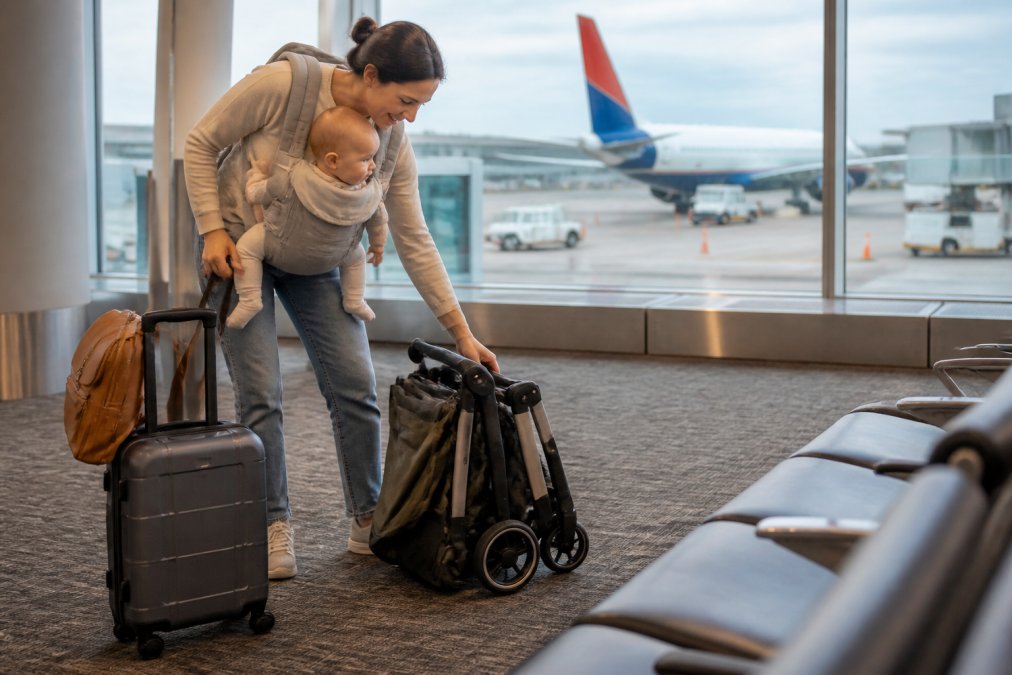
A lightweight travel stroller for flying should fold small enough for an overhead bin and light enough to carry one-handed while holding your child. Most airlines allow gate-checking, but a compact-fold model you bring onboard saves time and reduces damage risk.
FAA-Approved and Airline-Friendly Options
There's a persistent myth that the FAA "approves" strollers. It doesn't, the FAA regulates child restraint systems used in aircraft seats, not strollers. What you want is a stroller that folds carry-on-friendly and lifts overhead without help. For the car seat you'll use on the plane, look for a label stating it is approved for aircraft use.
Best Portable Crib for Travel: Safe Sleep on the Go
The best portable crib for travel meets current safety standards, sets up in under a minute, and packs into a bag you can carry. For most families, a lightweight play yard or travel crib with a firm, flat mattress and mesh sides is the practical choice.
A few things to check before you buy:
- Firm, flat sleep surface. Soft mattresses and added padding increase suffocation risk for infants.
- Mesh sides for airflow and visibility. Breathable fabric keeps the sleep space cooler and lets you check on your baby without waking them.
- Weight limit and age range. Many portable cribs work from infancy to a toddler weight limit, check the spec against your child's size.
- Carry bag included. A crib without a travel bag is a crib you'll struggle to transport.
TSA Rules for Baby Formula and Breast Milk: What Parents Need to Know
TSA rules for baby formula and breast milk allow more than the standard 3.1-ounce liquid limit. Formula, breast milk, and juice are treated as medically necessary liquids and exempt from the usual carry-on restriction when traveling with an infant or toddler.
Here's what that means in practice:
- You can bring quantities larger than 3.1 ounces in your carry-on.
- You must declare them at the checkpoint for separate screening.
- They don't need a clear bag, but keeping them together speeds things up.
- You may be asked to open containers or undergo additional screening.
Essential Baby Carriers and Diaper Bags for Hands-Free Travel
A good carrier and a well-designed diaper bag make the biggest difference to hands-free mobility through an airport, theme park, or crowded market.
Carriers and Wraps
For travel, an ergonomic carrier with a quick-release buckle and breathable fabric beats a stretchy wrap. Wraps suit newborns but take time to tie, awkward in a security line. A structured carrier goes on in seconds and distributes weight across hips and shoulders.
Look for:
- Ergonomic seating that supports your baby's hips and spine
- Breathable fabric to prevent overheating in warm climates
- A weight limit matching your child's current size, infant to toddler
- Hands-free design so you can manage bags and documents
Diaper Bags Built for Travel
A travel diaper bag should be lightweight, easy to wipe clean, and organized enough to find essentials in the dark. Features worth paying for:
- A changing pad that folds out and wipes clean
- Insulated pockets for bottles
- A luggage sleeve that slides over a rolling suitcase handle
- Storage capacity without bulk
Portable Sound Machines and Feeding Gear for Stress-Free Trips
A portable sound machine and the right feeding gear turn a disrupted routine into a manageable one: white noise helps babies settle in unfamiliar rooms, and the right bottles mean no midnight scrambling.
Feeding Essentials: Bottles and Warmers
Pack bottles your baby already accepts, plus a portable warmer if your child is used to warmed milk. Practical picks:
- Collapsible bottles to save space on the return trip
- A portable bottle warmer that works from USB or a car adapter
- Cleaning supplies including a small brush and travel-sized soap
- A cooler bag for expressed milk if you're away from a fridge
Health, Safety, and Toy Straps: Don't Leave Home Without Them
Health and safety items are the easiest to forget and most annoying to buy at a destination. Keep a dedicated kit in your diaper bag permanently, and restock after every trip.
The Core Travel Health Kit
- Infant pain reliever and fever reducer (acetaminophen or ibuprofen) in the correct dose for your child's weight, ibuprofen is generally not recommended under 6 months, so check with your pediatrician
- A dosing syringe or cup, not a kitchen spoon
- Digital thermometer (forehead or ear is faster on the road than rectal)
- Adhesive bandages, antiseptic wipes, and medical tape
- Diaper rash cream and fragrance-free sunscreen (mineral formulas are gentler on infant skin)
- Prescription medications in their original labeled packaging
- Nasal aspirator and saline drops
- Oral rehydration packets for stomach bugs
- A copy of your child's immunization record and insurance card, photographed on your phone
Medication Rules You Need to Know Before Security
Prescription medications in original packaging with the pharmacy label are permitted in carry-on and should be declared at the checkpoint. Liquid medications are exempt from the 3.1-ounce limit but may face additional screening. A small cooler bag with a gel pack is allowed for refrigerated medication, gel packs count as medically necessary liquids when accompanying medication.
International Trips: Two Things Most Guides Miss
If you're leaving the country, two issues come up that domestic guides skip:
- Voltage and plugs. A bottle warmer or sound machine designed for 120-volt outlets won't work on a 220-240-volt system without a converter, a plug adapter changes the plug shape, not the voltage. Check the device label for "100-240V" before packing. If it only reads 120V, leave it home and use a hotel kettle or warm water instead.
- Car seat regulations. Car seat rules vary by country, and a seat legal at home may not be legal at your destination. Some countries require ISOFIX-specific seats, and a few don't recognize foreign seats at all. Check the destination's transportation authority before you fly, and consider renting or buying a seat locally for the destination portion of the trip.
Toy Straps and the Small-Parts Problem
- A quick-release clip a caregiver can open one-handed but a toddler cannot
- A short tether (under about 8 inches) so it can't become a strangulation risk
- Non-toxic, food-grade silicone or BPA-free plastic, these go in mouths constantly
- A washable, one-piece build with no detachable beads or charms
For the current safety requirements on any sleep or restraint product you pack, the Consumer Product Safety Commission guidance on infant sleep products is the place to start. It's updated as standards change, so check it before every purchase.
Rental vs. Buying Baby Travel Gear: Which Makes Sense?
Renting baby gear makes sense for short trips, bulky items, and one-time needs; buying suits frequent travelers and items you'll use at home. Most families do both, and the split depends on three variables: trip length, how often you fly, and whether the item has a second life at home.
The Three Questions That Decide It
- How many nights? Under four nights, rental almost always wins on bulky items, you avoid bag fees, gate-check risk, and hauling. Over seven nights, the math breaks down: weekly rental rates on cribs and full-size strollers often approach the cost of a budget-friendly purchase.
- How often do you fly? One trip a year is a rental profile. Three or more is a buying profile, because the gear amortizes across trips.
- Does it live at home too? A carrier, sound machine, or convertible car seat gets used daily; a travel crib or beach stroller may not. Buy the daily-use items; rent the single-purpose ones.
What Rental Actually Costs You
Rental pricing is quoted per day with a multi-day discount, plus delivery-and-pickup and cleaning fees. Two things surprise first-time renters:
- Delivery windows are tight. Most companies drop off and pick up within a scheduled window, not on demand. If your flight lands at midnight, you may pay for a night you can't use.
- You're responsible for damage. Read the damage policy before booking, stroller wheels, crib mesh, and car seat covers are the most common charge-back items.
- Car seats are the exception. A rental car seat has an unknown history, it may have been in a crash, cleaned with the wrong products, or stored in a hot trunk. Many safety advocates recommend bringing your own or buying new at the destination.
The Sustainability Angle Most Guides Skip
Renting is the highest-impact eco-friendly move in baby travel gear. A travel crib used two weeks a year and stored for a decade wastes materials, shipping emissions, and space, while rental pools keep the same crib in circulation across dozens of families. If you do buy, look for OEKO-TEX certified fabrics, GREENGUARD Gold certified cribs and mattresses, and strollers with replaceable parts, certifications matter most for items your baby sleeps in or chews on.
Multi-Child Logistics Change the Math
With two or more kids, the rental-vs-buy decision flips in a few places:
- Double strollers are expensive to buy and awkward to rent. A single compact stroller plus a ride-on board or a second lightweight carrier is often cheaper and easier, especially on narrow airplane aisles and European-style sidewalks.
- Cribs, if two children need separate sleep spaces, renting a second crib at the destination usually beats hauling two.
- Car seats, buy, don't rent, and consider a narrow convertible that fits three across in a rental sedan.
A Simple Decision Table
| Item | Best Bought | Best Rented | Why |
|---|---|---|---|
| Travel stroller | Frequent flyers (3+ trips/year) | Occasional trips | Used at home too; rental fees add up fast |
| Portable crib | Families who travel often | One-time or short trips | Bulky to store; rental pools are well-stocked |
| Car seat | Almost always | Rarely, and only with a verified history | Safety and fit; unknown crash history is the risk |
| Sound machine | Almost always | Rarely | Small, cheap, and useful at home |
| Carrier | Most parents | Rarely | Used daily; fit is personal |
| Bottle warmer | If you warm milk daily | Short trips | Bulky; hotel kettles and warm water work |
| High chair / booster | If you eat out often at home | Destination-only trips | Bulky; restaurant high chairs are common |
For safety-certified gear you'll use again and again, Baby Jewells carries a curated range of baby and toddler essentials from brands that prioritize rigorous child safety standards.
Frequently Asked Questions
What is the most essential baby gear for air travel?
The essentials for air travel include a lightweight, compact-fold stroller that fits in the overhead bin, a baby carrier for hands-free movement through the airport, and a diaper bag with enough storage for a full travel day. A portable sound machine and a few favorite toys can also help keep your baby calm. Always check your airline's specific carry-on rules for baby items before you fly.
How do I choose a travel stroller that meets FAA requirements?
The FAA does not certify strollers, but it does allow certain car seats to be used on planes. For strollers, look for a lightweight model under 15 pounds that folds compactly enough to fit in the overhead bin. Check the folded dimensions against your airline's carry-on size limits. A stroller with a quick-release harness and a sun canopy will make travel days easier, and many parents prefer one that is also car-seat compatible.
Are portable cribs safe for overnight travel?
Yes, portable cribs can be safe for overnight travel if they meet current safety standards and are set up correctly. Look for a crib with a firm, flat mattress and a secure locking mechanism. Always follow the manufacturer's weight and age limits, and never add extra padding or soft bedding. If you are unsure about a rental crib's history, bringing your own travel crib gives you peace of mind.
What baby travel gear is worth the investment?
A lightweight travel stroller, a comfortable baby carrier, and a reliable portable crib are the three items most parents say are worth the cost. A sound machine and a well-organized diaper bag also make a big difference. Before buying, think about how often you travel and whether renting gear at your destination might work better for occasional trips.
Packing for a trip with a baby is stressful enough without second-guessing every purchase. The gear that works is the gear that's lightweight, safe, and easy to use one-handed. Baby Jewells offers a carefully curated selection of baby and toddler products, from travel-friendly essentials to nursery staples, all sourced from trusted brands that prioritize safety. With a 30-day money-back guarantee and 100% safe payments, you can stock up before your next trip. Shop now and travel lighter.